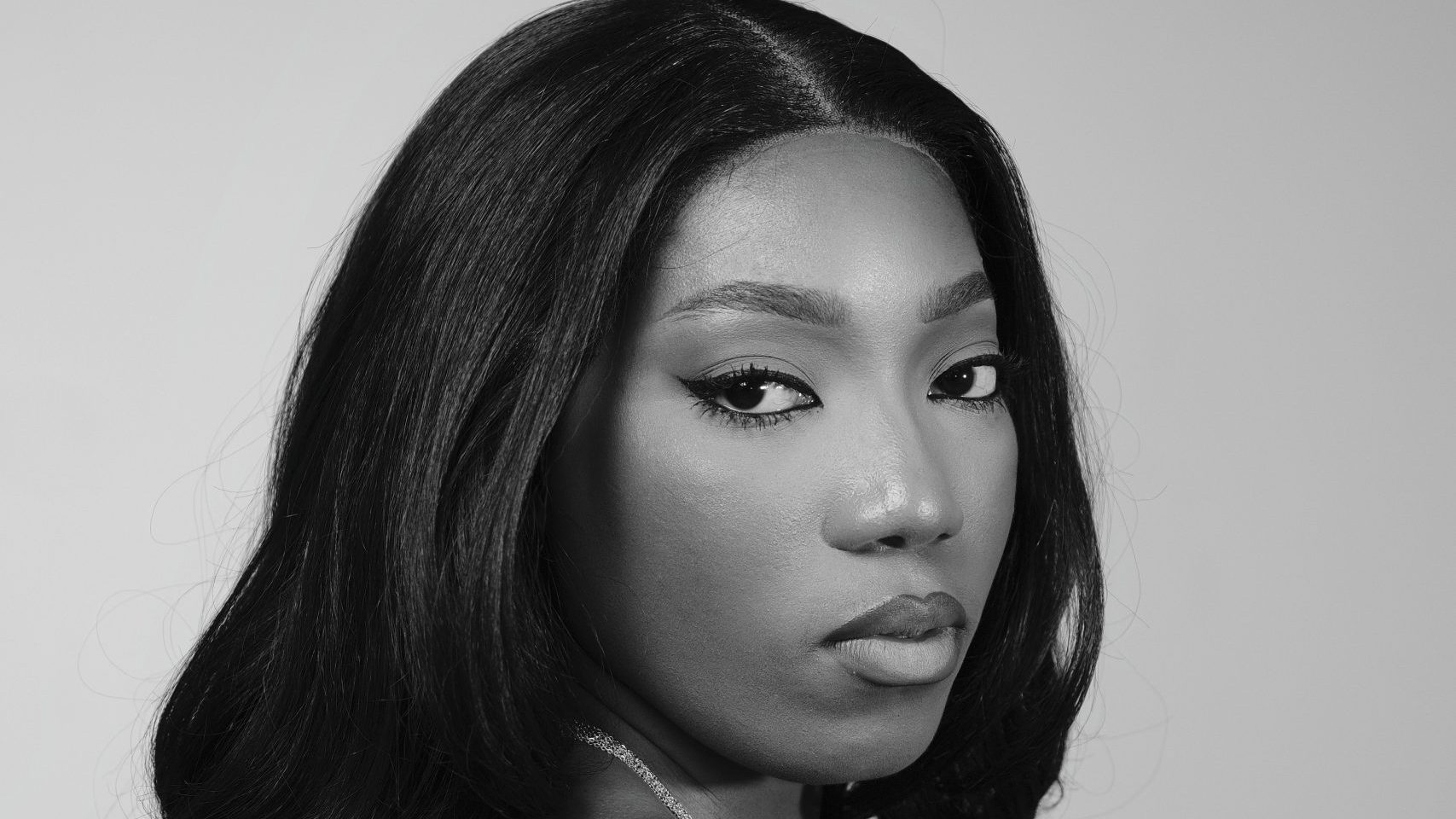
Dami Oniru (born Bri’ana Oluwadamilola Oniru-Edwards) has built something rare in Nigerian music: a thriving R&B career on her own terms. With over 7 million streams across platforms and three Headies nominations, including Best R&B Album for her 2022 project “Matter of Time”, she’s proven that independent artists can create lasting impact. Her music carries the soulful weight of classic R&B while weaving in subtle touches of her Nigerian upbringing, creating a sonic space that feels both familiar and fresh. From her breakout single “Iyawo” to having her song “Fallin” featured on DSTV’s “Our Best Friend’s Wedding,” Dami Oniru has consistently shown that vulnerability, when channelled through great artistry, can heal both the creator and the listener. In this conversation, she opens up about navigating the music industry as an independent artist, the pressure of intimate performances, and why she refuses to be boxed into anything other than the R&B category she’s worked so hard to master.
Let’s start with your name. Because your government is Bri’ana Oluwadamilola Oniru-Edwards. You have a project that’s called Bri’s Lounge. You’re professionally known as Dami Oniru. So, what does everyone call you in your day-to-day life?
Dami. Some friends and family call me Bri’ana. Some people call me Damilola. I guess it just depends on how close you are to me or whatever. But most of the time I’m just Dami.
You were born in Atlanta, but you were raised between Lagos and Atlanta. So, how did growing up in two different worlds shape your sound and how you move through the music industry?
I think growing up between those two places was actually very interesting. My mom had me when she was young. That was one of the reasons why I ended up coming back to Lagos to live with my grandma so my mom could focus on school. So, I had the privilege of flying back and forth between Lagos and Atlanta so I could spend time with my mom, but also because I was based here for school.
In terms of it shaping my sound, I think a lot of my R&B influence definitely came from being in the States a lot, and it’s kind of rooted a little bit in my mom’s taste in music growing up. She was—still is—a very big R&B head. So a lot of what she used to listen to is what I listened to, I mean, I didn’t really have much of a choice, I was a child. And you know, children are kind of like sponges. So, I think my mom definitely played a huge part in my love for R&B.
And then just growing up in Nigeria as well, my uncle loved music, and I was around him quite a bit as well. So, he introduced me to the likes of John Legend, and then other uncles playing Fela, P-Square, Plantashun Boyz, Styl-Plus artists like that. So, it definitely shaped my sound in the sense that I’m an R&B artist. But I also try to infuse my Nigerianness or upbringing into my music in terms of the kind of language I use. So sometimes I’ll put one or two lines in pidgin, but I’ll use a typical R&B cadence, for example. So I just try to merge it in very subtle ways that’s not so on the nose.
Do you remember your first memory of making music? Like the first time music came to you as something that you did rather than something you consumed.
Oh, right. Yeah, actually when I was younger, I didn’t know how to write and I was never good at comprehension, but for some reason, I would just always form lyrics in my head and write them down. Nothing really ever came of it, but I guess that would be my first memory of me ever actively participating or trying to create music as opposed to just listening.
How about professionally?
Professionally, my first time in the studio I think was in 2013. I had known since I was, I think, 14 or earlier, that I wanted to do this. I was in primary school because I found my primary school directory a couple of years ago, and I found that inside there I had written that when I grow up, I want to be a singer. But I think the first time I thought of it professionally was when I was about 14.
A couple of years later, after telling my mom and going back and forth on that, and my family disagreeing, she finally agreed to take me to a studio. One of my aunts paid for a studio session, and I recorded a cover of Sam Smith’s “Stay with Me.” So I’ll say that was my first professional experience. It was very—I was very shy. It was very scary. I was very nervous because my mom was there, and I’m like, ah, this is something I want to do. So I have to really convince her that I can be good at this thing. It turned out well, but it was a lot.
Does that Sam Smith cover exist on the internet?
Yes, it does. It is on SoundCloud.
We shall find it (Here it is!). Speaking of beginnings, “Iyawo” was your breakout single. Can you take us back to the moment you realised that the song was connecting with people way, and what changed for you after that?
I think the moment I realised was probably right after I put it out. I remember being in my living room that night. I uploaded everything myself. That was my first release, obviously. So, I was just awake, nervous to put it out and then after putting it out, just wondering, my gosh, what will people think? I had never heard a song like that before. And then obviously it’s your—it’s like, I don’t know. It’s like being naked on the street. If I were to compare the feeling to something, everybody can just see you, you know?
But the immediate reception was better than I expected. I don’t know that I really had any expectations. I wasn’t expecting people to hate it, but I also wasn’t really expecting people to like it. But the reaction was good. It was very encouraging. And then after that, I put out more music. It just made me want to keep doing more because of some of the comments I was getting. People really just liked the music. And the more I put out music, I could tell that my music was really doing things for people, whether it’s helping them heal emotionally or just telling them a different version of a story. But yeah, it was very encouraging. It was very, very encouraging, and that’s one of the reasons why I haven’t stopped.
Okay. Yeah. Your song “Fallin” ended up on DSTV’s “Our Best Friend’s Wedding.” So how did the placement happen, and did you get emotional watching your song become part of someone else’s love story on screen?
I think one of the creators of the show had reached out to me on SoundCloud to ask for permission. And funny enough, I think I had been watching the show up until the point where they reached out. So I was already a fan, so I was like “oh wow, they want to put this song on this show, this is so cool”. So obviously, I told them yes, and watching the episode did make me emotional because I think that was probably my first ever placement. It’s confirmation or validation that, you know, people see you and they love what you do. Not that that’s why you should do it, but it’s just always nice when you have that reassurance to know that you’re making some sort of impact and you’re making music that people actually enjoy. And “Fallin” is a very special song to me. So, it just meant a lot that somebody would even want to use it at all.
You dropped a project in 2022 called “Matter of Time”, and it earned you three Headies nominations as best female vocalist, best R&B album, and best R&B single. That’s quite huge. Can you walk us through the day you found out about the nomination? Where were you? Who were you with? Who did you call first?
I think I was at the gym, actually. I just saw tweets and one of my friends messaged me, sent me a screenshot of the nominations, and I was like, “Whoa,” I just paused my workout because I was actually in shock. I definitely was not expecting that. And I just remember feeling very proud of myself. Just very proud of myself, honestly. Since I started, people have always tried to box me into the Afrobeats category, just everything other than R&B, which is what I actually do. So to be recognised for a genre that I actually work hard at creating music in, it was just a lovely feeling to know that again people are listening, my music is healing people or helping people, and it helps them create core memories, things like that.
Speaking of working hard at R&B, one of the things that is common in the genre R&B, which is also something that your music has been described as having, is being soulful, having some depth in it. So when you’re creating, are you intentionally going deep, or are you just a naturally vulnerable person, and it just comes out when you write?
I would not describe myself as naturally vulnerable, at least not outwardly expressive in that regard, but yes, I do intentionally create with my feelings. I want people to know that it’s actually okay to express how you’re feeling. You don’t have to hide it. You’re not the only one feeling that way. And maybe there’s just somebody else out there that needs to hear some of what you’re going through so that they can also know that they’re not alone. So that’s definitely something I keep in the back of my mind when I’m making music and when I’m writing. I want the emotion to be expressed through the way I sing or what I sing about. I’m not putting my pain in my music so that you feel that same pain, but it’s just so you know that that pain feels similar to yours, but there’s a way out. It’s not forever, and you’re not alone.
You are both a singer-songwriter and a producer. So, how does this change your creative process? Do you hear the production in your mind while you’re writing, or are they separate? Do you write and then produce? Do you produce and then write to fit it? What’s your process?
It depends. I have thousands of voice notes in my phone of songs I’ve written but I have no production for, and I don’t even know if I’m ever going to use most of them. So when I’m working with a producer, for instance, I like for us to create from scratch. That way, wherever level we get to in the production, even if it’s the bare minimum, I already have lyrics that start coming to mind. Sometimes it’s the other way around, where I already have the lyrics and we’re just kind of building to the songs.
When I’m producing my stuff, I kind of produce first, and then I write to it because I’m still a beginner producer. So I find that that’s the easiest method for me personally. And sometimes I just hear beats in my mind, and I just want to immediately work on making that beat become something real so that I can work on it, create music and then I don’t have to wait on a producer to lay down my ideas. But they can finish it for me if I start.
So, let’s talk live performances. You’ve performed everywhere from smaller shows like Art X Live to bigger shows like opening for Tems at Lafayette. What’s the difference between performing for a more intimate crowd versus a massive festival audience and which one scares you more?
Funny enough, I think I would say that intimate events scared me more because of that intimacy. There are fewer people in the room, so there are more eyes on you. It feels like you’re connecting with everybody in the room. Sometimes that can feel like a lot of pressure, but at the same time, it feels nice because it’s more special for the people in the room, because they feel like they get to have one-on-one moments with you as opposed to, you know, being in front of a larger crowd. So, that feels easier because there’s not just one person to focus on. You can distract yourself with a thousand different faces. But when it’s 50 to 100 people, it’s like, man, these people are really watching me. So, I have to do a really, really good job.
You’re an independent artist, but you have 7-plus million streams across all platforms. That’s something that we don’t really see without label machinery behind the artist, right? So, what’s the hardest part about being independent that people don’t see? And what’s also the most liberating part?
I think everything is hard, to be honest. When you’re an independent artist, you don’t have as many resources as a label-backed artist would have. And that’s not to say that you don’t have resources at all. It’s just not as much. So, it’s really important strategy-wise to make sure that with what you have, you’re making everything go the extra mile. Obviously, in the grand scheme of things and in comparison to a bigger artist, you’re still a fish in the pond, honestly.
But I think what makes it worthwhile for me is knowing that there are people listening, I do have a core fan base, there are people that care about the music, and there are people that want more. And they’re just constantly there supporting, whether I’m releasing or not. They’re there. They’re looking for me. So, I know that, you know, what I’m doing is impactful and to tie it back to the project that I released three years ago now I think it’s a “Matter of Time” once you’re dedicated to your craft and you’re consistent and you’re putting in the hard work and you’re pouring yourself into it, it is actually only a matter of time before things do start to pay off. So, just knowing that my music moves people, honestly, and getting little pockets of messages and DMs every other day from people letting me know that, it keeps me going, so I know I’m doing something worthwhile.
And are you determined to remain an independent artist?
I don’t think that was necessarily ever the intention, per se. But it has allowed me to figure out who I am and what I want so that when an opportunity does come to provide me with the resources I am looking for, I know what to do with it.
You have quite the following. You have over 600,000 views on YouTube and 1,700 subscribers. So, we know how people like to be when they can hide in a crowd; you will hear from them. So, what’s the most unhinged or the sweetest comment you’ve ever got on one of your videos?
I don’t know if I’ve gotten any unhinged comments. I mean, unless I’ve not seen it. But the sweetest comment I think I’ve seen is someone telling me that one of my songs helped them deal with the loss of their father. That really touched me because that song was actually kind of dedicated to my dad, though he’s alive, it was still him I thought of when I first heard the demo version that was written for me. So, without even telling people that, for someone to connect with it in that way meant a lot to me. And again, my music—a lot of music I make is made for the purpose of healing. So to hear that it’s actually doing that specific thing for somebody and helping them through that, again, is reassurance for me, and it’s validation for me and it’s just more motivation to never stop, even if my music only helps one person.
You’ve also been featured in The Native, Document Women, BBC Radio London, and even Grammy Global Spin. So, how do you navigate building your brand and getting press as an independent artist? Is there a strategy, or are you just making great music and hoping that people notice?
I mean, that’s the first thing, great music, hoping people notice, but there’s also the marketing side. So, you do kind of have to put yourself out there because even though people see you, they may not always reach out, you know. So, you have to put yourself in their line of sight and make sure not only are they seeing you, but they’re seeing what you have to offer, what you bring to the table, and your value. It’s a two-way thing. They see you, but you can also bring yourself to them.
What’s your usual pre-show ritual? Are you the girl who meditates? Are you the one who’s doing vocal warm-ups? Are you blasting hype music in the green room?
I’m probably somewhere eating amala before getting ready. I think that’s my number one thing. But I just pray. I just pray before I get on stage. But I just like to keep a very zen environment. So, not necessarily the quiet meditating. But I would say probably yes, in a meditative state, even though I’m in conversation or just trying to make sure last-minute T’s are crossed and I’s are dotted and things of that sort.
Okay. Have you ever had a full fangirl moment with another artist, or do you always keep it professional? And if you have fangirled, who was it?
I don’t think I’ve ever fangirled for anybody, but if I were to have that moment, it would probably be with Brandy. I don’t know if I’ll be able to keep my composure.
Valid. Honestly, valid. Okay. So, what’s on your playlist? You are supplying material for ours, but what’s on yours? Was there anything surprising on Dami’s Spotify Wrapped?
Was there anything surprising on my Wrapped? I don’t actually think so. I think my Wrapped was pretty accurate. I feel like there were some people left out, but it was pretty accurate.
What was the top genre?
Afro-R&B.
Makes sense. Yeah. But who are you listening to these days?
Ah, who am I listening to these days? I’m listening to Tems. I’ve been listening to Summer Walker’s album. Ayra Starr. I’ve been listening to her new project. And myself actually.
Yeah. Okay. Can you tell us about your latest release, “What We Call It”?
“What We Call It.” Man, “What We Call It.” That is actually a very special song to me. So like I mentioned before, I’m not necessarily the most vulnerable person in terms of outward expression of how I’m feeling; telling people how I’m feeling. I just kind of let myself feel things. So this song was important for me because we’re kind of exploring putting names to feelings. Obviously, in this regard, with this song, the feeling is love, but it’s kind of going around the bush and describing all the emotions that have connotations of love. And then finally giving it a name.
So sometimes we don’t always know what we feel, or we know what we feel but we don’t know what to call it. So, that was kind of what this is. I was trying to describe the feeling of love without calling it love, but it ended up still just being love.
Okay. What do you hope that people get out of it?
This is an interesting question. What do I hope people get out of it? I hope that they know that it’s okay to wear their hearts on their sleeve. I want them to know that love is very real. And love is kind. Love is patience. Love is beautiful despite what the world makes it seem today, or what experiences have made you feel like love is a fleeting emotion. It’s not. What is important is actually loving and being loved by the right people.
Okay. So in your career right now, you’ve already achieved so much; we’ve spoken about the Headies nominations, we’ve spoken about your fan base and number of streams. We’ve spoken about your press placements and how everyone is applauding you and giving you critical acclaim. So, what’s the next milestone that would make you feel like, okay, I’ve actually really made it?
Man, I don’t think there’s one, but I think me being more consistent or as consistent as I want to be. Usually, I’ve just dropped songs and just gone back to my real life and just let people enjoy and then pop up a couple of years later and drop another one. But I have so much music that I want to drop. I think my album probably. But before my album, my next EP. Yeah, I think my next EP and then my album and then that will be a major milestone for me.
When’s the album coming?
I want to say 2026, but I cannot promise that. But the EP is definitely coming next year.
Okay, we’ll look forward to that. So we’ve mentioned before that you were basically raised between two worlds, right? So if your Atlanta side and your Lagos side got into an argument, what would they be fighting about? Is it food? Is it the pace of life? Is it music taste?
It will probably be food and music. The types of food, actually. In Lagos, it’s all rice and swallow. And over there, it’s more like soul food or fries and burgers. I mean, I know we have burgers here, but it’s not as staple. We don’t have the exact same type of menu. But yeah, definitely food.
And you’re a fan of both?
Fan of both types of food? Yeah. Oh, yeah. 100%. I don’t discriminate on food. I’m a foodie. As long as it’s good, bring it my way.
What’s the most unexpected thing that has ever happened to you during a live performance?
Well, I think I’m never expecting sound to be an issue. But there are times, two times actually now, where I’ve had to perform without a band or a backing track even though we’ve had a soundcheck prior to the show. The sound just didn’t work, and I had to just perform acapella, which I don’t mind to be honest. Fortunately, though, both times the audience was great. So, I just did a little interactive session, had them sing with me, and taught them lyrics. It was very nice. It wasn’t what I wanted, but it turned out well. I was grateful.
If someone is discovering Dami Oniru for the first time through this interview, which is not very likely, I feel like we all know your name, but which song should they start with? And why? What do you think is the one track that best represents who you are as an artist right now in this moment?
This is a tough one. I feel like the first song I’d recommend—wow, this is hard. I feel like the first song I would recommend would be “Emotions.”
Okay. Why would you recommend “Emotions”?
It’s just one of my favourite songs I’ve written; just from the cadence to the lyrics to it being about a relationship. I feel like that’s something that everybody can relate to. I feel like that’s something that we all have in common, whether it’s romantically or whether it’s platonically. Relationships are something that we have to deal with every day because we’re dealing with people. I feel like it’s just a very relatable song, and it’s so real. Yeah. And I just love the song. So that would be the one.
And is there any song you’ve ever put out that you regret releasing?
Ah, regret is a strong word, but if I could go back, yes, there are definitely songs, knowing what I can do or knowing my skill set today and the songs I have even unreleased today. There are probably a couple songs that I’ll be like, “do I really want to put this out?” Yeah.
Do you want to share?
I’ll bully “Iyawo” a little bit. That was my beginning, but listening back to it now, I’m just like, “Wow, what was that?” Because it’s so different from my sound now. That wasn’t even R&B. That was absolutely not R&B.
Yeah, but that’s a sign of growth anyway.
Exactly.