Music has always had a peculiar way of bringing us back to what makes us human and helping us feel deeply. Not just the dizzying exhilaration of falling in love, but the quieter, more enduring expressions of affection: the warmth of being held, the familiarity of belonging, the tenderness of familial bonds, and the courage it takes to remain open-hearted in a world that can sometimes make loving feel like an act of surrender. Some records feel like an embrace. They invite you to linger, listen a little closer, and surrender to the emotions unfolding before you. Lodù’s Wine & Honey is one such offering. Warm, intimate, and steeped in the poetry of affection.
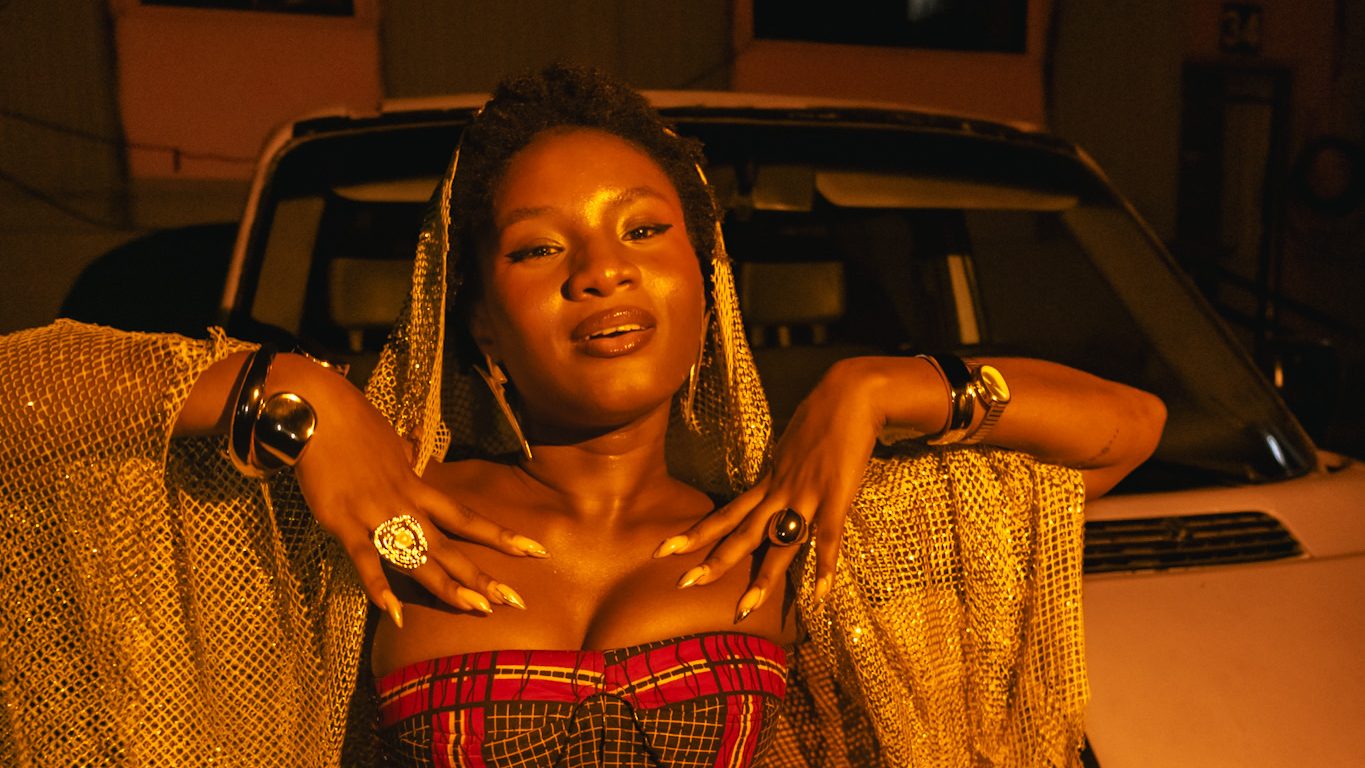
On Wine & Honey, her latest EP, Nigerian singer-songwriter Lodù approaches love as both an experience and an offering, drawing on its sweetness, intensity, and contradictions to create a body of work that feels like an intimate testament to the many ways we give and receive it.
Inspired by the different dimensions of love, Wine & Honey grounds its concept in the biblical poetry of the Song of Solomon. Lodù draws from the scripture’s evocative treatment of desire and devotion, particularly its association of love with the intoxicating qualities of wine.
The result is a project whose title captures the duality of its emotional landscape: honey for its sweetness, wine for its intensity. Across the EP, this duality unfolds through warm, folk-inflected arrangement and an inviting sonic atmosphere that feels less like listening to a collection of songs and more like being welcomed into a room where music, conversation and feeling exist in beautiful harmony.
Wine & Honey has a particular intimacy in its construction. Its arrangements possess the warmth and spontaneity of a live performance, evoking the atmosphere of a quaint jazz room where every instrument, inflection and passing note feels deliberately placed. This is especially evident in Lodù’s approach to vocal production, an aspect of the creative process she immersed herself in while making the project. After taking up the skill in 2024, she took responsibility for the EP’s vocal production, experimenting with recording, layering, and harmonies from her home studio. Her work on the background vocals is particularly remarkable, revealing a meticulous understanding of how the human voice can become an instrument in its own right.
Beyond its sonic sensibilities, Wine & Honey also marks a notable evolution in Lodù’s artistic expression. Since her debut in 2024, she has grown increasingly comfortable with her voice, her lyricism and, importantly, the language through which she communicates her experiences. Singing predominantly in Yorùbá, she embraces the poetic possibilities of her native tongue, letting its imagery and emotional nuances shape how she articulates love. Wine & Honey is as much an embrace of her cultural identity as it is an exploration of affection, locating deeply personal emotions within a distinctly African sensibility.
What’s your favorite part about making the project?
It definitely would be the vocal production. It’s a skill that I picked up in 2024. I did all the vocal production on the project. I learned on the job, and it’s really exciting to have a project out where I was immersed in the entire creative process and experimenting as I’d like, from recording to layering. I was just in my studio at home, experimenting away, and it was the best feeling.
Your debut single was in 2024. What would you say has changed for you creatively between that project and your recent EP?
It would definitely be my expression, especially in my style, words, and lyricism. My debut single and the first projects and songs I put out were a great experience. It was a good time in my life, but I didn’t really have an expression in my native language, for instance. I was 18/19 when I released those projects, and I’ve grown since then. The songs on Wine & Honey sound more mature and have more depth than my earlier projects. I have gotten more comfortable at expressing myself, especially in my native language.
You are an ABRSM-certified, classically trained artist who is also skilled at playing the violin. What specific ways have these foundations impacted your sound and creative direction in general?
I was introduced to music theory and classical music at age 8, and it gave me a strong foundation in the rudiments of music: sound, tones, and pitches; my ears are tuned, especially when it comes to production. It is easier to produce music when you have a strong foundation in theory.
Your EP is called Wine & Honey. Why were those two images the right way to represent this chapter of your artistic expression?
The project was inspired by love and its many forms: agape, romantic, familial. I wanted imagery that perfectly captured the sweetness and intensity of love, and Wine & Honey did just that. I’m a church girl, and I drew a lot from Songs of Solomon. He wrote some of the best love songs and poems, likening love to the intoxication of wine.
Love, especially romantic love, can feel so intense and strong that you feel like you can’t get enough of the object of your desire. I just wanted something that fully captured and expressed that feeling, and Wine & Honey was perfect.
Listening to Wine & Honey felt like being immersed in a live performance at a quaint jazz bar somewhere. What was the creative inspiration behind structuring the EP in that way?
I love live instrumentation, and I feel honored and privileged to make the kind of music I enjoy. I listen to DOTTi The Deity and Sola Allyson. I really enjoy their music. Another artist is Raye. She really inspired me, especially her album, 21st Century Blues. From the first track, it felt like I was in the room with her. It greatly inspired the intro of the track on my project, and I felt like I wanted my audience to also have that kind of experience where I’m bringing them there with me in the room from the start.
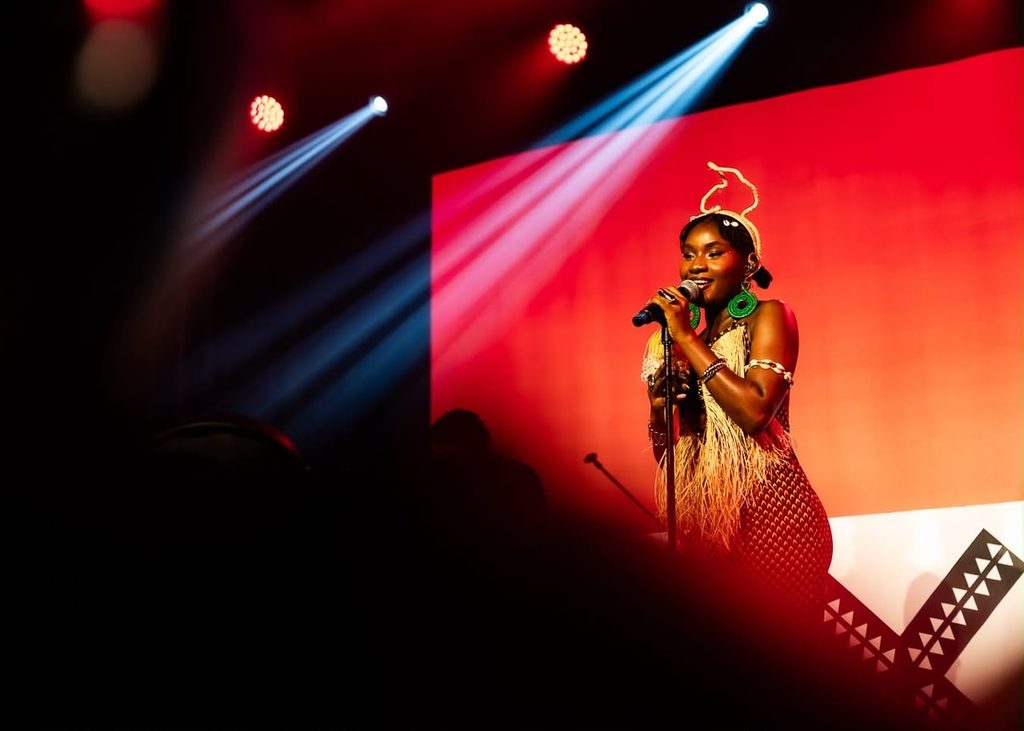
And I really love live instrumentation. I love performing live so much. It’s my whole world. Before I started writing and releasing music, I was performing live. I really enjoy talking to the audience and connecting with them, and I’m glad that I was able to express that in the project.
Your time in Scotland introduced you to a very different musical environment. You also performed at the Royal Yacht Britannia, and you also opened for the legendary Steve Gard. What did that experience teach you about yourself as a performer?
Honestly, it was the best time of my life. I am very glad I got to do that. Originality is key in life. It’s easy to want to conform, do something acceptable, or generalize so everyone can relate. It was important to me to bring that originality to that performance. I shared my culture and songs I write in my language, without shrinking or twisting them to appeal to a European audience. Genuinely, they loved the culture. They didn’t understand the language, but they could feel its soul.
That was a testament to the fact that I never have to lose my originality or my core because I want to experiment and try new things in my career.
Wine & Honey is rooted in culture and folk textures. You sing predominantly in Yorùbá through each track. What does the Yorùbá language allow you to say about love that can’t be expressed in English?
Honestly, a lot of things. Indigenous languages are honestly great for conveying emotions; you hear certain words or sentences in the indigenous languages, and then you hear the literal translation, and you realize that you could have never have thought of it that way in English. English can feel quite restrictive when expressing the depth of emotions in many ways our indigenous languages aren’t. Our indigenous languages are always so poetic. In a way that the poetry of English can’t even catch up to at all.
In English, you say “I miss you,” but the Yorùbá translation for “I miss you” is “the longing for you is making my heart hurt”. Yorùbá is so expressive, poetic, and beautiful.
I listen to music from other cultures; a friend is about to drop a project in Hausa. I don’t understand the language, but I’ll listen and learn the translation. When I listen to music from other cultures- Korean, Chinese, Japanese, French, and many others- when they are speaking about love, it just feels totally different. You can feel the emotions in how the language is spoken and portrayed. It’s just totally different.
What’s one production choice on Wine & Honey that listeners might miss but you’re particularly proud of?
Since I was very involved with the vocal production, I think the background vocals would definitely be the standout. I had Ojurere on a couple of the tracks as well; he’s a fantastic vocalist and producer.
He produced lolufe and Fire; we got together in the studio, and it all came together beautifully. I really enjoyed working on the background vocals, especially lolufe; there’s so many things that we did on the vocal background.
Perhaps sometime I would do a vocal breakdown of the tracks on the project; if you listen closely, you’d hear all the different parts and notes. It was fun, and I quite enjoyed the process.
If someone listens to Wine & Honey from the beginning to the end, what do you hope they understand about love and about you, Lodù?
I hope that Wine & Honey inspires people to love. There’s a lot of disappointment, hurt, and negativity in life, but we shouldn’t let it affect how we show up for ourselves, the people that we love, and the people that want to love us.
They say love is the closest thing to madness, and I’ve been there and felt that. As beautiful as love feels, it can also hurt. I’ve felt great love that also ended terribly. It’s very easy to be bitter and not want to trust again. Betrayal is easy to hold on to.
I hope that this project also helps people understand that love is also for yourself, and you can choose to take it away from whichever object you’re giving it to when you can tell that you’re no longer welcome there. Do not give anybody that much power to turn you into something that you’re not; instead, take that love and pour it into yourself and your loved ones.
Love again when the time is right. When it comes again, open your heart and love freely, and if it ends, you love again, and again, and again, because love is the ultimate thing.